



Installing the hack...

24-hour offline hackathon

HACK-O-OCTO 4.0 Bigger
· Better · Bolder

Thirty-six teams. One room. One night. Build something real with people who care as much as you do — then defend it on stage.

24 HOURS NON-STOP 10 PROBLEM STATEMENTS PRIZES ANNOUNCED SOON TEAMS OF 2–6 ZERO ENTRY FEE CERTIFICATES FOR ALL 24 HOURS NON-STOP 10 PROBLEM STATEMENTS PRIZES ANNOUNCED SOON TEAMS OF 2–6 ZERO ENTRY FEE CERTIFICATES FOR ALL
In association with
  • Institution's Innovation Council
  • Ministry of Education, Government of India
  • ACM-W
About us

Built by builders, for builders

The community

About GDG on Campus CU

Google Developer Groups (GDG) Chandigarh University is a vibrant community of tech enthusiasts, innovators and future leaders. As an official Google-supported initiative, GDG CU fosters an environment of learning, collaboration and innovation, empowering students to explore the latest technologies and build solutions for real-world challenges. We run workshops, hackathons and tech events that connect students with industry leaders and cutting-edge tooling.


The event

What is Hack-O-Octo 4.0?

Hack-O-Octo 4.0 is the flagship 24-hour hackathon hosted by GDG Chandigarh University, bringing together the brightest minds in technology, design and innovation. It is a breeding ground for creativity and collaboration, challenging participants to craft cutting-edge solutions to real-world problems. With guidance from industry mentors and access to strong on-campus resources, teams turn ideas into impactful products.

Timeline

Navigating the Clock

Every milestone from the first registration to the final demo.

  1. 1st September, 2026

    Registrations Open

    The wait is over! Sign up to be part of Hack-O-Octo 4.0 and start your journey toward innovation.

  2. 1st October, 2026

    Registration Closes

    Last chance to register! Don't miss out on this exciting opportunity.

  3. 10th October, 2026

    Ideation Phase Results Announced

    Ideation Phase Results Announced: The brainstorming phase ends, and the best ideas take the spotlight. Get ready to take your concept to the next level!

  4. 23rd–24th October, 2026

    Offline Hackathon

    It's time to roll up your sleeves and dive into coding, building, and creating with your team at the heart of the action.

  5. 24th October, 2026

    Thrilling Surprise!

    Stay tuned for an unexpected twist that'll keep you on your toes!

Rewards

Top Rewards for Top Ideas

The prize pool is being finalised with our partners. Full breakdown lands here soon.

Rewards & More

COMING SOON

Cash prizes, goodies and partner rewards are being locked in right now. Registrations are open in the meantime — the podium is worth waiting for.

Certificates for every participant, confirmed
Runner Up Prize amount to be announced To be announced
Grand Prize
Champion Prize amount to be announced To be announced
Second Runner Up Prize amount to be announced To be announced
Previous Edition

Inside Hack-O-Octo 3.0

Nine frames from the last edition — the room, the teams and the final stretch.

Our team

The Architects of the Innovation

The people who plan the chaos, wrangle the logistics and keep the coffee flowing.

Faculty

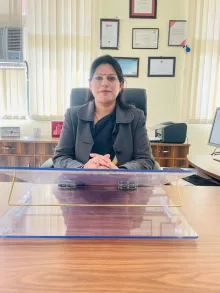
Dr. Manisha Malhotra

Dr. Manisha Malhotra

Director,UIC
Er. Prabhjot Kaur

Er. Prabhjot Kaur

Faculty Advisor

GDG Core Team

Naman Vrati

Naman Vrati

GDG Lead
Dhruv Jindal

Dhruv Jindal

Web Frontend Lead
Amitrajeet Konch

Amitrajeet Konch

Web Backend Lead
Vansh Manhas

Vansh Manhas

Event/Outreach
Shivam Mishra

Shivam Mishra

Event/Outreach
Rishika Paul

Rishika Paul

Android Lead
Raghav Gupta

Raghav Gupta

Content Lead
Hardik kumar

Hardik kumar

Flutter Lead
Kanika sehgal

Kanika sehgal

Content writer
Anshu Sharma

Anshu Sharma

AI/ML Lead
Aditya Pandey

Aditya Pandey

Cloud Lead
Adwitaa Singh

Adwitaa Singh

Design/Visuals Lead
Sriya Mitra

Sriya Mitra

Design/Visuals Co-Lead
Nitin Sharma

Nitin Sharma

Social Media/Marketing Lead
Swadha

Swadha

Social Media/Marketing Co-Lead
Problem Statements

Ten Problems Worth Your Weekend

Pick one track and go deep. Nine defined problems across real domains, plus an open wildcard if yours isn't here.

The problem

Most digital systems still expect the user to be the glue. You open one tool, copy something into another, wait, check a third, then stitch the result together by hand. The coordination cost of a complex goal falls entirely on the person, not the software.

The challenge

Build an autonomous intelligent system that can take a high-level objective, plan the steps needed to reach it, interact with the relevant tools or services, adapt when conditions change mid-flight, and verify its own final output.

Directions worth exploring
  • Multi-agent systems
  • Workflow automation
  • Intelligent assistants
  • Autonomous research
  • Developer automation
  • An approach nobody has tried yet
What we're looking for

A system that visibly reasons, actually executes, recovers from failure, and produces something a real user would depend on. Reliability matters as much as capability — a demo that works once is not a system.

Build systems that don't just answer — they accomplish.

The problem

A farmer makes a continuous stream of high-stakes calls: when to irrigate, how much fertilizer, whether that discolouration is disease or drought, when to sell. Most of those decisions are made on partial, scattered, or second-hand information. The cost shows up as lower yield and resources burned for nothing.

The challenge

Build a technology-driven solution that makes agriculture measurably smarter, more sustainable, and more data-informed than guesswork allows.

Directions worth exploring
  • Crop monitoring
  • Irrigation optimization
  • Soil intelligence
  • Pest and disease detection
  • Yield forecasting
  • Post-harvest loss reduction
  • Supply chains and market access
What we're looking for

Affordable, scalable and genuinely practical. A solution that assumes a cheap phone and patchy connectivity will beat one that assumes a data centre. Show the value a farmer actually captures.

Can technology help every field make smarter decisions?

The problem

Phishing, deepfakes, identity theft, fraudulent transactions, malicious sites, coordinated misinformation, account takeovers. The tells that used to give these away are gone. Ordinary users — and plenty of organisations — can no longer reliably distinguish real from fabricated.

The challenge

Build a system that establishes trust in digital interactions by detecting, preventing, verifying, or responding to threats.

Directions worth exploring
  • Fraud prevention
  • Identity verification
  • Phishing detection
  • Deepfake and synthetic media detection
  • Privacy-preserving systems
  • Authentication
  • Threat intelligence
What we're looking for

Go past showing a warning banner. We want detection, verification, risk scoring, prevention, or a concrete response. A warning nobody acts on has not reduced any risk.

In a world where anything digital can be manipulated, how do we know what to trust?

The problem

Most digital and physical environments are built around a narrow default set of abilities. Everyone outside that default — visual, hearing, mobility, cognitive, linguistic — absorbs the friction as a daily tax on getting anything done.

The challenge

Build a solution that makes technology, information, services, or physical spaces meaningfully more accessible.

Directions worth exploring
  • Navigation and wayfinding
  • Communication tools
  • Education and learning
  • Workplace accessibility
  • Public infrastructure
  • Digital interfaces
  • Assistive hardware
What we're looking for

Usability, affordability, inclusivity and independence — designed in, not retrofitted. The test is whether someone gains autonomy they did not have before.

Don't make people adapt to technology. Make technology adapt to people.

The problem

Roads, bridges, water mains, power lines and transit networks are largely maintained reactively. Something fails, then it gets fixed. The warning signs were usually there and nobody was reading them.

The challenge

Build a system that detects early warning signals, assesses infrastructure health, predicts likely failures, or sharpens maintenance decisions.

Directions worth exploring
  • Sensor networks
  • Phone-based sensing
  • Imagery and vibration data
  • Crowdsourced reporting
  • Geospatial data
  • Historical maintenance records
What we're looking for

Observe → Detect → Predict → Prioritize → Respond. The strongest entries won't just report what's already broken; they'll tell a decision-maker what to look at before it becomes critical.

The best failure is the one that never happens.

The problem

Floods, fires, earthquakes, landslides and extreme weather saturate the exact systems people need most. Networks drop, emergency lines jam, and critical information fragments across agencies at the precise moment decisions have to be made in minutes.

The challenge

Build technology that improves preparedness, early warning, communication, coordination, rescue, or recovery.

Directions worth exploring
  • Early warning systems
  • Emergency communication
  • Resource allocation
  • Evacuation planning
  • Missing-person coordination
  • Disaster mapping
  • Offline-first communication
  • Crowdsourced incident reporting
What we're looking for

Design for the bad case: unreliable connectivity, incomplete information, overwhelming demand, and no time. Graceful degradation counts for more than features.

When everything else fails, can your technology still work?

The problem

Cities produce waste at enormous scale while genuinely valuable material is lost inside it — through poor segregation, inefficient collection routes, thin recycling capacity, discarded edible food, and no real link between the people producing waste and the people who could use it.

The challenge

Build a solution that helps prevent, identify, segregate, collect, reuse, recycle, or intelligently manage waste.

Directions worth exploring
  • Smart bins and sensing
  • Waste marketplaces
  • Food redistribution
  • Collection route optimization
  • Computer-vision sorting
  • Recycling traceability
  • E-waste and industrial waste
  • Circular-economy models
What we're looking for

A measurable delta: less waste produced, more material recovered, cheaper operations, or a clear sustainability gain. Put a number on it.

What if waste wasn't the end of a product, but the beginning of another?

The problem

Demand keeps climbing while homes, campuses, businesses and whole cities leak electricity — largely because consumption is invisible at the point where someone could actually act on it.

The challenge

Build a solution that makes energy smarter, cleaner, more reliable, or more efficient.

Directions worth exploring
  • Renewable energy management
  • Smart buildings
  • Demand forecasting
  • Consumption monitoring
  • EV infrastructure
  • Microgrids
  • Battery optimization
  • Peer-to-peer energy
What we're looking for

Demonstrable savings, better reliability, higher utilisation, or a real sustainability gain. Show the baseline and show the improvement.

The cleanest unit of energy may be the one we never waste.

The problem

Students learn at different speeds and in different ways, yet content, assessment and pacing arrive standardised. Teachers are squeezed from the other side: large classes, fragmented tools, no time, and almost no visibility into where a specific student actually lost the thread.

The challenge

Build technology that improves how people learn, teach, assess, collaborate, or pick up practical skills.

Directions worth exploring
  • Personalized learning
  • Accessibility in education
  • Skill assessment
  • Practical and hands-on learning
  • Peer learning
  • Teacher productivity
  • Academic integrity
  • Remote learning and employability
What we're looking for

Don't digitise an existing classroom process and call it new. Rethink the mechanism. The interesting entries change what learning does, not just where it happens.

What would education look like if we could redesign it today?

The problem

Some of the best ideas don't fit inside a category somebody else defined. If you've been carrying a problem worth solving and none of the nine above describe it, this is your slot.

The challenge

Identify a significant real-world problem you believe deserves to be solved, and build an innovative technology-driven solution for it. It needs a real user, a genuine pain point, a meaningful technical solution, and demonstrable impact.

You must be able to answer
  • Why does this problem matter?
  • Who actually experiences it?
  • Why are existing solutions insufficient?
  • Why is your approach different?
  • Can it realistically scale?
What we're looking for

A convincing answer to every question above. The bar is higher here, not lower — you're defining the brief and the standard at the same time.

Find a problem we didn't think of — then make us care about it.

AI is optional everywhere except PS01

Only PS01 is explicitly about autonomous intelligent systems. For PS02 through PS09, AI is welcome but never required. Solve the agriculture problem beautifully with IoT, Flutter and Firebase, or the disaster problem with mesh networking and maps, and it is judged exactly as strongly as a model-driven approach. Fit the tool to the problem, not to the trend.

The track mix

Problem statements mapped to domain and core technologies
PS Domain Core technologies
PS01 AI AI, Agents, APIs, Cloud
PS02 Agriculture IoT, Data, Computer Vision, Mobile
PS03 Cybersecurity Security, Privacy, FinTech
PS04 Accessibility Mobile, Hardware, Computer Vision, UX
PS05 Smart Cities IoT, Sensors, Data
PS06 Disaster Management Cloud, Maps, Communication
PS07 Sustainability IoT, Computer Vision, Logistics
PS08 Energy IoT, Analytics, CleanTech
PS09 EdTech Web, Mobile, Cloud, Data
PS10 Wildcard Anything

Swipe to see all columns

Sponsorship

Sponsorship Tiers

Back the next generation of builders. Pick the tier that fits your goals.

Sponsorship benefits included at each tier
Benefits
Silver ₹30K
Most picked Gold ₹50K
Platinum ₹100K
Logo on website Included Included Included
Social media mentions & shoutouts Included Included Included
Shoutout during event Included Included Included
Recruiting opportunities Included Included Included
Logo on event banners Not included Included Included
Opportunity to invite judges Not included Included Included
Booth space at event Not included Included Included
Sponsor track for hackathon Not included Included Included
Logo on certificates Not included Not included Included
Prominent branding on materials Not included Not included Included
Personalized email blast to attendees Not included Not included Included
Exclusive speaker session Not included Not included Included
Private One-on-One Session with Top Finalists Not included Not included Included

Swipe the table to compare tiers

Want to sponsor Hack-O-Octo 4.0?

Tell us what you are looking for and we will tailor a package around it.

Contact the team
Destination

Where to Join Us?

Venue

D4 South Campus, Chandigarh University, NH-05, Ludhiana – Chandigarh State Hwy, Punjab

Date & Time

23rd – 24th October, 2026 · 11 AM onwards

Good to know

Ample space, high-speed connectivity and round-the-clock power. Bring your laptop, your chargers and an idea worth defending.

Get directions
FAQs

Got Questions?

Everything you need to know before you show up with a laptop and a plan.

Hack-O-Octo 4.0 is like the Batman of hackathons - it arrives at Chandigarh University precisely when it's needed most. It takes place at Chandigarh University on 23rd–24th October, 2026

Only the coolest minds of the future can join the league of Hack-O-Octo 4.0 superheroes. If you're pursuing a degree in Chandigarh University,you've got a front-row seat to the action!

Good news, fellow hackers! Registration for Hack-O-Octo 4.0 is as free as the air we breathe. Keep your eyes peeled for the registration link - it's like a treasure hunt, but with fewer pirates.

Participating in Hack-O-Octo 4.0 is like leveling up in the game of life. Sharpen your creative, technical, and problem-solving skills while facing real-world challenges. Plus, you'll expand your network and spruce up your portfolio. Certificates for all and cash prizes for the true heroes! And Goodies too!!! Yay

Assembling a dream team of 2 to 6 members increases your chances of success. It's like forming your own Avengers squad!

Fear not, hungry hackers! We'll keep your energy levels up with three square meals a day. It's fuel for your creative superpowers!

Hack-O-Octo 4.0 adventure requires your physical presence, like a quest that unfolds offline. Unfortunately, remote participation isn't in the hero's handbook.

The Hack-O-Octo 4.0 marathon will test your endurance for 24 action-packed hours. It's like a movie marathon, but with code!

We've got you covered with internet access 24/7. No need to worry about losing your connection in the midst of heroic coding battles!

Rest easy, heroes! Comfortable accommodation awaits you within the fortress of Chandigarh University. It's like a superhero's secret hideout.